Pagan References in Biblical Frameworks: tracing the impact of the 'Historia scholastica' on medieval French historiography (2026-2027)
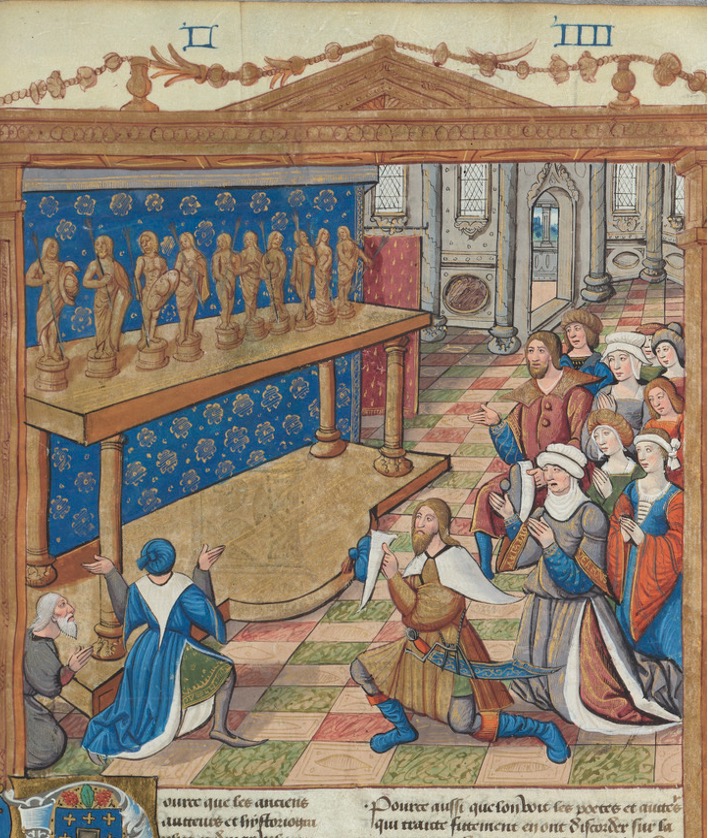
This project aims to study how biblical material and references to ancient Graeco-Roman culture were interwoven, transmitted and adapted in medieval French historiography. A particular focus will be on the influence of Petrus Comestor's Historia scholastica (ca. 1170), a Latin Bible textbook used widely by medieval theologians for the study of Scripture. This work is notable for combining Bible narratives, commentary and insertions relating to events from ancient myth and secular history, placed in chronological relation to the biblical timeline. Surviving in over 700 manuscripts, the Historia scholastica was a vastly influential work, serving as a basis for the most widely copied medieval French Bible adaptation – Guyart des Moulins' Bible historiale –, as well as a model that inspired medieval chroniclers who composed works of “universal” history (such as the vernacular Histoire ancienne jusqu'à César and the Chronique de Baudouin d'Avesnes in their different redactions), seeking to cover the history of the world and all its peoples. The bulk of these texts have not received in-depth attention by scholars to date. Many, including Comestor's Historia scholastica, still lack modern critical editions. The present project will focus on examining a corpus of manuscripts of the Historia scholastica, the Bible historiale and select chronicles in medieval French to analyse phenomena of variation regarding the interworking of culturally heterogeneous – and potentially contradictory – material and patterns of influence of Comestor’s manual on the selected vernacular works of historiography.
The project, building on my previous research within the scope of a FAN Academic Excellence Fellowship (2024-2025), will provide a basis to further explore the strategies used by medieval chroniclers to harmonize biblical and non-biblical narratives and ideas within the writing of universal history in medieval Europe.
Laura Endress (UZH Postdoc Grant)